
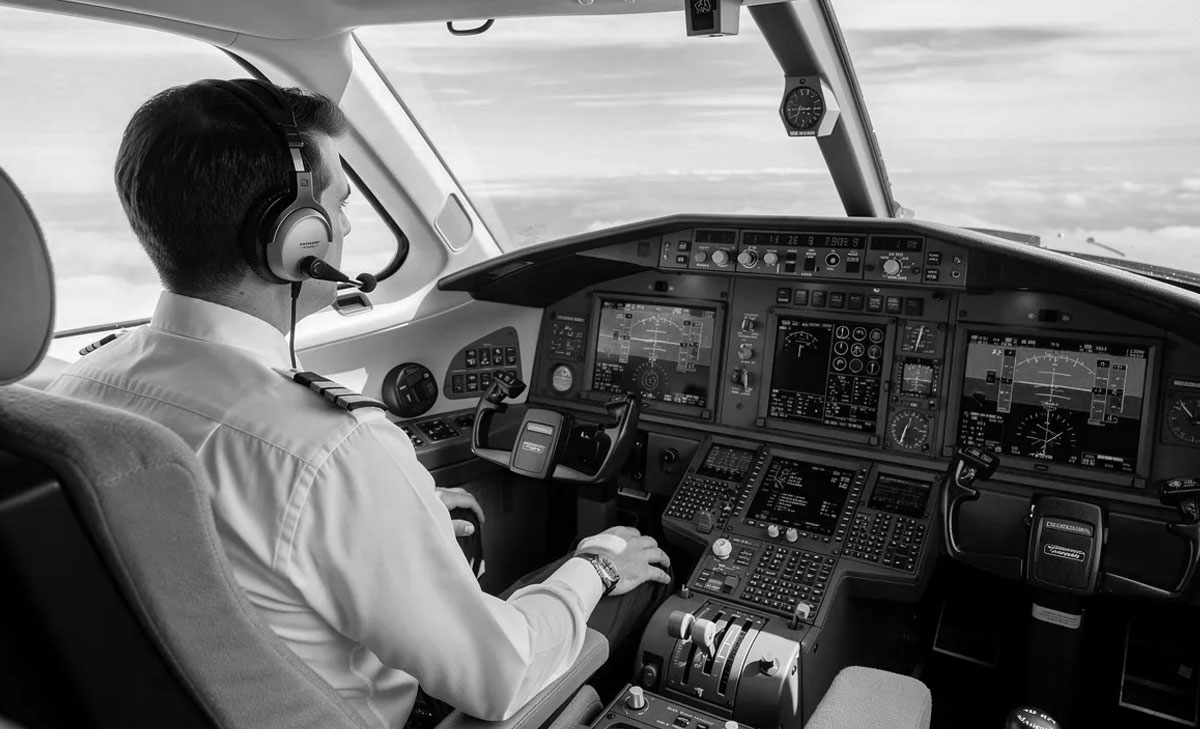
(A Practical Example Using the Citation CJ2)
When operators add a single-pilot multiengine turbine aircraft to a Part 135 certificate, particularly an aircraft like the Citation CJ2, a common question arises: Is a Cockpit Voice Recorder (CVR) required?
The short answer is no, not automatically.
For single-pilot–certificated aircraft operating under Part 135, a CVR is required only when two pilots are required by certification or by operating rules. The determining factor is not how many pilots are on board, but whether the regulations require two pilots for that operation.
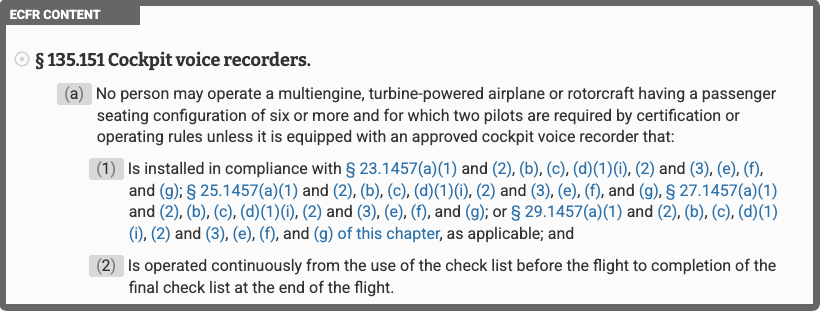
The confusion usually starts with §135.151(a). That regulation applies to multiengine, turbine-powered aircraft configured for six or more passenger seats for which two pilots are required by certification or operating rules. On its face, that language appears to capture many light jets operating under Part 135.
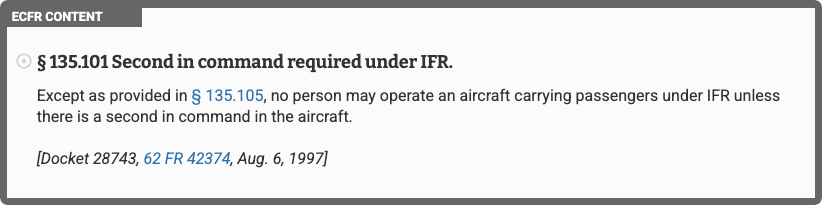
Many turbine aircraft, including the Citation CJ2, are certificated for single-pilot operation. At the same time, Part 135 IFR passenger operations generally require two pilots under §135.101. That is where the misunderstanding begins.
The regulatory structure includes an exception.
Section 135.105 provides relief from the second-in-command requirement when an aircraft is equipped with an operative approved autopilot and the operator’s OpSpecs authorize its use for single-pilot IFR operations.
When that relief applies, the operation remains single-pilot under the operating rules. Two pilots are not required, and the CVR trigger in §135.151 is not activated.
In other words, if the aircraft is certificated for single-pilot operation and is legally operated single-pilot under §135.105, a CVR is not required.
The Citation CJ2 illustrates how this works in practice. It is a multiengine, turbine-powered aircraft configured for six or more passenger seats, yet it is certificated for single-pilot operation. When a CJ2 is added to a Part 135 certificate and operated under approved single-pilot IFR with a functioning autopilot and appropriate OpSpecs, the regulatory requirement for two pilots does not exist. Without that requirement, §135.151 does not mandate a CVR.
The aircraft model alone does not determine the answer. The operating rules do.
Some operators hold OpSpec A062 (SIC PDP) and elect to operate with two pilots even in single-pilot-certificated aircraft. This raises another common question: if two pilots are on board, does that automatically require a CVR?
The answer is no.
Carrying a second pilot under an approved SIC PDP does not change the operating-rules framework. The aircraft remains authorized for single-pilot operations under Part 135. The second pilot is permitted, not required. Because the operating rules still allow single-pilot operation, the CVR requirement is not triggered solely by the presence of two crewmembers.
This distinction is critical: two pilots onboard does not equal two pilots required.
A CVR becomes required when two pilots are required by either certification or operating rules. Situations that trigger the requirement include:
In these scenarios, §135.151 applies and a CVR must be installed.
If two pilots are required, a CVR is required. If two pilots are not required, a CVR is not required.
The key is alignment. Aircraft certification, autopilot operability, OpSpecs authorization, and operational procedures must all support the intended mode of operation. When those elements are consistent, the CVR requirement becomes straightforward.
Determining whether a CVR is required depends on the interaction between certification, operating rules, and OpSpecs authorization. Operators should evaluate these elements carefully before making equipment or staffing decisions. Sky Safety Solutions provides regulatory guidance to help ensure those determinations are properly supported.